Tuesday, April 14, 2015

Week 7 | Neurosci + Art | The Art of Neuroscience

As of this decade, the scientific community often comments "we know nothing about neuroscience" in the great scheme of life sciences. While nerves are the fundamental unit that dictates our consciousness, unconsciousness, and every and all form of communication within and outside of our physical bodies, we have yet to even touch upon the function of neurons as we did with other biological fields. The mixture of neuroscience and art has created a third culture coined "neuro-aesthetics" by John Hymen (Hymen 1). According to Mengfei Huang at Stanford, "Artists have also embraced new knowledge about visual perception to work alongside the discoveries of scientists" (Huang 1). Huang further asserts that “through their studies, modern psychologists have presented to us ways of ‘seeing’ works of art more competently...[and] have shown to us how the eye organizes visual material according to definite psychological laws" (Huang 1).


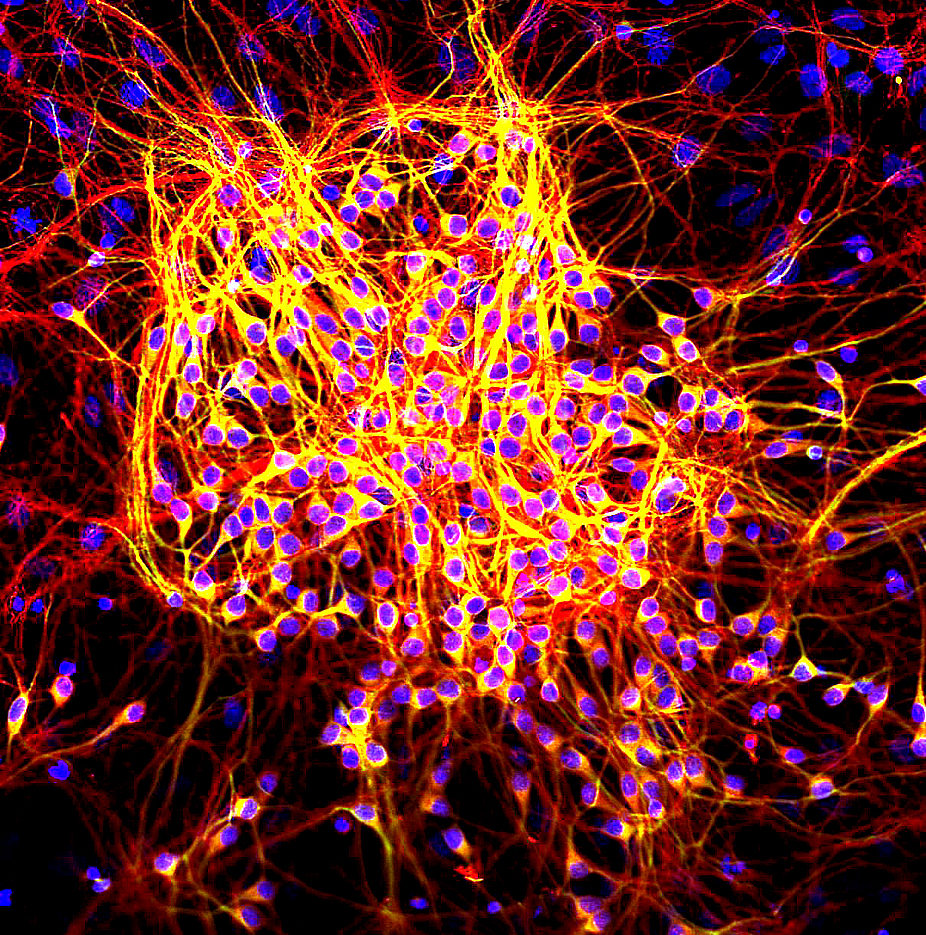
Tau is an abundant protein in neurons that stabilizes microtubules. Through immunofluorescence staining with fluorescent proteins, we witness a beautiful artwork of nature itself.
<http://en.wikipedia.org/wiki/Tau_protein>

I will never forget the first time I looked at neurons through the optical-fluorescent microscope and created my first piece of art from my neuroscience imaging research. As Carl Jung would put it, "Our age wants to experience the psyche for ourselves" (Jung 6).

Regarding the readings, I was particularly taken aback from analytical psychologist Carl Jung exploration different aspects of spirituality including religion, rational, and esoteric elements beliefs from the context of the unconscious and conscious part of human psychology. This week's reading "The Spiritual Problem of Modern Man," discusses the issues that I have personally come across through my spiritual life. Although easier said than done, the solution is through balancing the spiritually integrated life.


Artwork representing active consciousness.
<http://iconicallyrare.com/2012/08/08/releasing-your-inner-superhero-iconic-examples/>


Artwork representing the unconscious mind.
<http://infinityhousemagazine.com/wp-content/uploads/2014/11/TheUnconscious-art-150_905.jpg>


Carl Jung - The Self
<https://www.youtube.com/watch?v=kAPyRryK1HY>
Interested in Carl Jung's perspective on the spiritual problem of the modern man, I found his perspective of "The Self" to complement the way we position ourselves within our world.

From a medical perspective, it is much too common for a person to be diagnosed with some level of anxiety or neurosis. Especially considering the age of data gluttony surrounding us, it is often difficult to maintain a sane mind while sorting and sifting through all the junk and "information constantly bombarding us" (Vesna, Mind Intro 0:37).  Most psychological/neuroscience related conditions stem from a more understandable terminology, to be a split or severing between our conscious self and unconscious self. This theme of consciousness, unconsciousness, and subconsciousness has led to the creation of many beautiful artworks including the ones above. After reading Jung's article, I came to realize how self reflection or simply partaking in personal introspection can be the source of artistic motivation. 


References:

Huang, Mengfei. "The Neuroscience of Art." Stanford Journal of Neuroscience 371.9614 (2008): 1+. Web. <http://web.stanford.edu/group/co-sign/Huang.pdf>.

Hymen, John. Beyond Mimesis and Convention: Representation in Art and Science. Dordrecht: Springer, 2010. Art and Neuroscience. Queens.ox. Web. 23 Apr. 2015. <http://www.queens.ox.ac.uk/academics/hyman/files/art_and_neuroscience.pdf>.

Jung, Carl. "Carl Jung - The Self." YouTube. JungianMaps, n.d. Web. 23 Apr. 2015. <https://www.youtube.com/watch?v=kAPyRryK1HY>.

Jung, Carl. The Spiritual Problem of Modern Man (n.d.): n. pag.Selfhealingbiopolar. Web. 12 Apr. 2015. <https://selfhealingbipolar.files.wordpress.com/2014/05/c-g-jung-the-spiritual-problem-of-modern-man-1928.pdf>

Vesna, Victoria. "Mind Intro." YouTube. UCLA, n.d. Web. 23 Apr. 2015. <https://youtu.be/RF0Qt7L2-kM?t=37>.

Sunday, April 12, 2015

Week 6 | Biotech + Art | The art of Biotechnology


Biotechnology can be used not just for the extension of life but also for human expression. I realized early on that many of the instruments in biotechnology could be used for artistic purposes. I also can't deny many of the scientific experiments I have conducted in the past can be prime examples of artistic designs in and of itself.

Our very Art Sci center exploring the "Third Culture"
<http://artsci.ucla.edu/>


In fact, there is a Art-Sci center dedicated to creating art through biotechnology within the CNSI at UCLA already!

Artwork grown on petridishes containing bacteria and fungi.
Please check out even more beautiful designs in the website below.
<https://andreacasalotti.wordpress.com/2012/07/29/petri-dish-art/>

From this week's reading, I particularly enjoyed Ellen K. Levy's discussion on microbiology. As a microbiology sub-major, I have come across many rudimentary experiments on petri-dishes which can easily becomes a literal work of art. By standard procedures of various fluorescent protein engineering, art can literally be created from varying how the fungi or bacteria is spread onto the petri dish. Like what professor Vesna said this week, "artists are starting to go into the lab and start working with live cells" (Vesna, Biotech intro NEW 0:43).


Performance artist Stelarc and his implanted ear in his arm posing.
http://www.blogcdn.com/www.engadget.com/media/2007/05/stelarc-ear.jpg


Performance artist Stelarc and his implanted ear in his arm. Goal to functionalize the actual ear so communication can happen. This is a prime example of expressionistic art influenced by biotechnology.
https://www.youtube.com/watch?v=NyhNGZvNMVY

More extreme forms of artistic expression was captured by performance artist Stelarc in his piece Extra Ear. To delineate, biotechnology creates the fundamental cellular fabric that the ear is created upon while the artistic explanation and motivation determined the placement. However, for Stelarc, the artistic mission isn't complete just yet. He plans to make the organ functional so that communication can actually be possible. This process from my understanding is severely limited by the biomedical science surrounding the purpose of the art. Thus, until further developments in science takes place, the art will be limited to only a physical expression rather than a functional one as well.

On a similar note, Ellen K. Levy's indirectly discusses how the development of biotechnology art is mainly limited by the development of science and engineering.

Biotechnology influenced artwork from the Sci-fi TV series Fringe
Hope you will enjoy the influence art has on my favorite Sci-fi series
<http://www.tv.com/shows/fringe/>
Biotechnology influenced art is literally everywhere from billboards commercializing sci-fi tv shows and movies we watch to those displayed in museums. Personally, my favorite TV show of all time utilizes biotechnology based artwork for every cutscene as shown above. As advancements continue in the scientific field biotechnology, so will the artwork.


References:

"Art | Sci Center + Lab | UCLA Art | Sci Center + Lab." Art | Sci Center + Lab | UCLA Art | Sci Center + Lab. N.p., n.d. Web. 12 Apr. 2015. <http://artsci.ucla.edu/>

Casalotti, Andrea. "Petri Dish Art." Florilegium. N.p., 29 July 2012. Web. 12 Apr. 2015. <https://andreacasalotti.wordpress.com/2012/07/29/petri-dish-art/>

"Heard The One About The Artist Who Grew A Third Ear?" YouTube. Sky News, n.d. Web. 12 Apr. 2015. <https://www.youtube.com/watch?v=NyhNGZvNMVY>

Levy, Ellen K. "Defining Life: Artists Challenge Conventional Classifications" <http://nanobioart_artscicenter.com/hybrid/sites/default/files/Ellen_Levy_BioArt.pdf>

Lund K, Manzo AJ, Dabby N, Michelotti N, Johnson-Buck A, Nangreave J, Taylor S, Pei R, Stojanovic MN, Walter NG, Winfree E, Yan H. Molecular robots guided by prescriptive landscapes. Nature. 2010 May 13;465(7295):206-10. doi: 10.1038/nature09012.


"UCLA Art|Sci Center + Lab - Promo." YouTube. YouTube, n.d. Web. 23 Apr. 2015. <https://www.youtube.com/watch?v=q2QXL5u85AQ>.

Vesna, Victoria. "Biotech Intro NEW." YouTube. UCLA, n.d. Web. 23 Apr. 2015. <https://youtu.be/Fvp924_pbgc>.

Week 4 | Medicine + Technology + Art | The Art of Medicine

Heading to medical school this summer, I cannot recount how many times I heard the saying "art of medicine." Until this week's lecture by Professor Vesna, I never took into consideration the literal translation of "the art of medicine." After exploring topics including plastic surgery, MRI, and Ingber's work describing the architecture of life, I became convinced by the prevalent duality of art and medicine.

Initially, medicine was described as an art as learning through dissection and human anatomy, which is held as god's greatest creation and artwork since the human body is also yet another phenomenon where the golden ratio is prevalent.


This is a MRI image of a Chiari malformation after the application of digital color. One cannot help notice how MRI images like these may inspire decades of artistic endeavors and creations.
<http://radiology-files.blogspot.com/2013/05/chiari-malformation-arnold-chiari.html>
Today, MRI provides us with a less invasive solution to see into the human body. Besides its contribution to healthcare, MRI has also catalyzed a form of art according to Silvia Cassini. Just like how an artist utilizes basic fundamental training to create a portrait or reproduce an image based on his or her training and judgement, technicians who operate the MRI can be analogously compared. From a medical perspective, the MRI takes a photograph of the interior of a body. The artist, or radiologist/physician, controls how the images are taken. Similar to a blank canvas and pallet, two different artist will come up with completely different artworks even if they are drawing the same model.

Angela Palmer's MRI scan art video, which resembles the process of how MRI of the human body is acquired. The art not only progresses through the timeframe of the scanning process, but also the nature of the MRI allows us to see different layers of the art.
<https://www.youtube.com/watch?v=Cn-wCiGjCeU>


The Variational Denoising of MRI datasets depicts the actual process of data acquisition for MRI. While this has pure scientific purposes, one can't deny the artistic element involved. It is also the science behind the process that led to the creation of the corresponding art.

<https://www.youtube.com/watch?v=MNMDtoY4jRQ>

The distinction between MRI being a science and art is merely the intent and purpose. These two videos, although they rely on fundamentally the same concept have different purposes and targeted audience. Nonetheless, both of these videos -- one regarding the pure aesthetics of MRI while other discusses the procedure of data acquisition -- are ultimately simply two sides of the same coin.

One of the articles that Professor Vesna assigned this week that I found particularly interesting was the hippocratic oath, which can be referred to as the founding guidelines for medical practice. Euthanasia is among one of the most controversial topics in medical sciences. Like art, medicine is also changing and based on each doctor's individual perspective on the best course of action, similar to how an artist creates his or her work based on their best judgement. And that's why "medicine is an art."

Hippocratic oath, which is the founding document of modern medicine. While the information is not written in today's language or medical development in mind, its fundamental guidelines remain a vital aspect for modern day healthcare providers to uphold through the lens of their best personal and professional judgement.
<http://www.pbs.org/wgbh/nova/body/hippocratic-oath-today.html>


References:

Casini S. (2011). Magnetic Resonance Imaging (MRI) as mirror and portrait: MRI configurations between science and the arts. Configurations 19, 73–99 10.1353/con.2011.0008

"Chiari I Malformation Mri by Living Art Enterprises and Photo Researchers."Fine Art America. N.p., n.d. Web. 12 Apr. 2015.

Palmer, Angela. "Angela Palmer - Artist | MRI Scan Art Video." YouTube. YouTube, n.d. Web. 12 Apr. 2015.

Shihabuddin, Allama Mohammed. "Furqania Academy Waqf: Center for Research on Science of Qur'an and Hadith." Furqania Academy Waqf: Center for Research on Science of Qur'an and Hadith. Furqania Academy Waqf, n.d. Web. 12 Apr. 2015.

Tyson, Peter. "The Hippocratic Oath Today." PBS. PBS, 27 Mar. 2001. Web. 12 Apr. 2015.

"Variational Denoising of MRI Datasets." YouTube. YouTube, n.d. Web. 12 Apr. 2015.

Wednesday, April 8, 2015

Week 3 | Robotics and Art | Mass production, AI, and Distrust

Professor Vesna’s lecture for the week explored industrialization, which led to the concept of mass production and "assembly lines" that eventually led way to how much of everything is produced in our society (Vesna, Robotics pt2) . As a result of mass production, both in hard and soft copies, art work originally limited to a small population is now prevalent for anyone with internet access or a fraction of the original cost to purchase a replica. The phenomenon for making mass production possible may be attributed to assembly lines, and specifically robots that allow production beyond what is achievable by human labor alone. However, the societal response to machines and replicated art work/objects are dualfold.


Cross stitch replica of the artwork from the sistine chapel. Although it is out of context and a replica, the artwork still holds its artistic merit for providing a different type of experience commendable on its own behalf.
<http://www.prweb.com/releases/2006/02/prweb344597.htm>

With the advancement of current technology, virtual tours may provide an sistine chapel experience "right from home" that you can see for yourself here: 


It's a tradeoff. The comfort of being in your home and cost afforded by a virtual tour for the cost of the "actual experience."

In a related topic, Walter Benjamin contends that "even the most perfect reproduction of a work of art is lacking in one element: its presence in time and space, its unique existence at the place where it happens to be" (Benjamin 1936). Essentially authenticity. Out materialistic culture to a certain degree and extent is driven by originality, even in the world of medicine. Applying Benjamin's concept or originality of art, robots can be thought of analogously to replicas that serve a singular function. As a result, there is a prevalent societal view that robots, no matter how advance they become, will always be below those who created it to simplify tedious functions, or otherwise complex human beings.

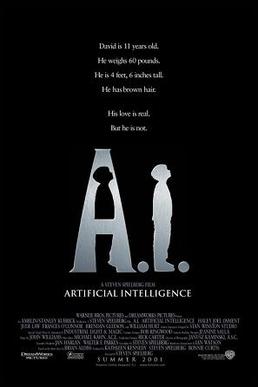
The movie Artificial Intelligence captures not only the artistic human imagination of how artificial intelligence would look like, but also the distrustful disdain humans have towards the idea of their own creations. Nonetheless, themes such as artificial intelligence and robotics have led to the creation of countless sci-fi based artwork, movies, and TV shows.
<http://en.wikipedia.org/wiki/A.I._Artificial_Intelligence>
One particular movie that comes to my mind is Artificial Intelligence, which describes a near future post-apocalyptic society where robots (referred to as meca) have adopted artificial intelligence in order to substitute aspects of societal human functions. This movie captures at its very core the overall distrust humans have towards their own masterpieces, in fear of being surpassed or even replaced by their own creation.

Other movies such as Terminator I, II, III further exemplifies the same theme of distrust towards robotics.<http://www.imdb.com/title/tt1340138/>
While less prevalent, credit cards is one of the most prevalent forms of human transactions that is processed digitally, essentially by robots. Since we feel more secure with carrying around cash rather than using our credit cards, humans generally have a disdain towards technological advancements.

According to statistics, credit card fraud accounts for "5.55 Billion in liability also account for 40% of all financial frauds" Thus, our mistrust may not be directly geared towards the technology itself but rather how it can be used for unwarranted activities. Personally, I believe technology, robots, and technology have expanded artwork in a manner that could not otherwise be achieved. However, I also believe it is essential for original art work to be available in its original context for those who are interested in submerging themselves with the "authentic" experience.


Reference:


"Artificial Intelligence (Philosophical Films)." Artificial Intelligence (Philosophical Films). N.p., n.d. Web. 18 Apr. 2015. <http://www.philfilms.utm.edu/1/artificial.htm>.

Benjamin, Walter. "The Work of Art in the Age of Mechanical Reproduction."The Work of Art in the Age of Mechanical Reproduction. Schocken/Random House, n.d. Web. 18 Apr. 2015. <https://www.marxists.org/reference/subject/philosophy/works/ge/benjamin.htm>.

"Credit Card Fraud Statistics." Statistic Brain RSS. N.p., 12 July 2014. Web. 18 Apr. 2015. <http://www.statisticbrain.com/credit-card-fraud-statistics/>.

"The Sistine Chapel 3D Virtual Tour - Online Virtual Visit from Your Home."The Sistine Chapel 3D Virtual Tour - Online Virtual Visit from Your Home. Vatican.com, n.d. Web. 18 Apr. 2015. <http://vatican.com/tour/sistine_chapel_3D/web>.


Vesna, Victoria. "Robotics Pt2." YouTube. University of California, n.d. Web. 18 Apr. 2015. <https://youtu.be/oAZ8bo9T_Pk>.

"Woman Takes Ten Years To Cross-Stitch a Replica of Sistine Chapel - Cl."PRWeb. N.p., n.d. Web. 14 Apr. 2015. <http://www.prweb.com/releases/2006/02/prweb344597.htm>.


Sunday, April 5, 2015

Week 2 | Math and Art | Piano to Differential Equations to Fractals

Mathematical algorithms are the fundamental subunits that are the foundation of all digitalized artwork. Prior to taking this course I only thought about how mathematics allowed for the creation of various art forms and creations, where each pixel is represented by a decimal which can be adjusted to fit the artist’s imagination. Essentially, I never considered how the progression of mathematics would actually influence, rather than merely describe, the innovation of art. Just as how mathematics could be used to describe phenomenon in nature.

Piano keys by frequency
https://blogger.googleusercontent.com/img/b/R29vZ2xl/AVvXsEjK47zNBrV7kkpxTjnlK4uv64a4OFvDQWwkRkG1g0VV8Nd3M-JKdluVRWRqq3sH3jVoSFCVa3_bbguFTsAjmUgZVN_QA1sBEZYl6aUR2ZfHAF-G8vvn6LzAi3BXRPDKDIawfBAQIrywrBI/s640/frequency_chart_bowed.gif
Music, for example the piano, can be scientifically broken down to a series of frequencies resembling the note and pitch and an amplitude that relates to intensity, respectively. A fourier transformation of the sine and cosine waves can convert an integration of periodically repeating functions into melody. In my biophysics research, I apply the same concepts of algorithms described in the "frequency domain article" used to describe musical pitches, frequencies, and intensity can be used to model almost everything in life from 3D images of viruses to 

Due to the advancement of technological application of mathematics, we have witnessed an entire genre of electronic based music and culture come to life during the last decade. This phenomenon also applies to artificial sounds such as a bird's cry or a person's voice. 

Artificial Voice Speaking
http://music.columbia.edu/cmc/MusicAndComputers/images/chapter1/words.aiff.jpg

Bird's song
http://music.columbia.edu/cmc/MusicAndComputers/images/chapter1/gull.aiff.jpg
The interchangeability between mathematics and music - science and art - made me realize how much the evolution of our taste in music and culture is limited, and at the same time bolstered, by the advancement of the sciences and technology. Thus, the juxtaposition between the mathematics, arts and sciences is a distinct, but inseparable one as math can be used to describe art, while art is also a transformation of a quantitative reality.

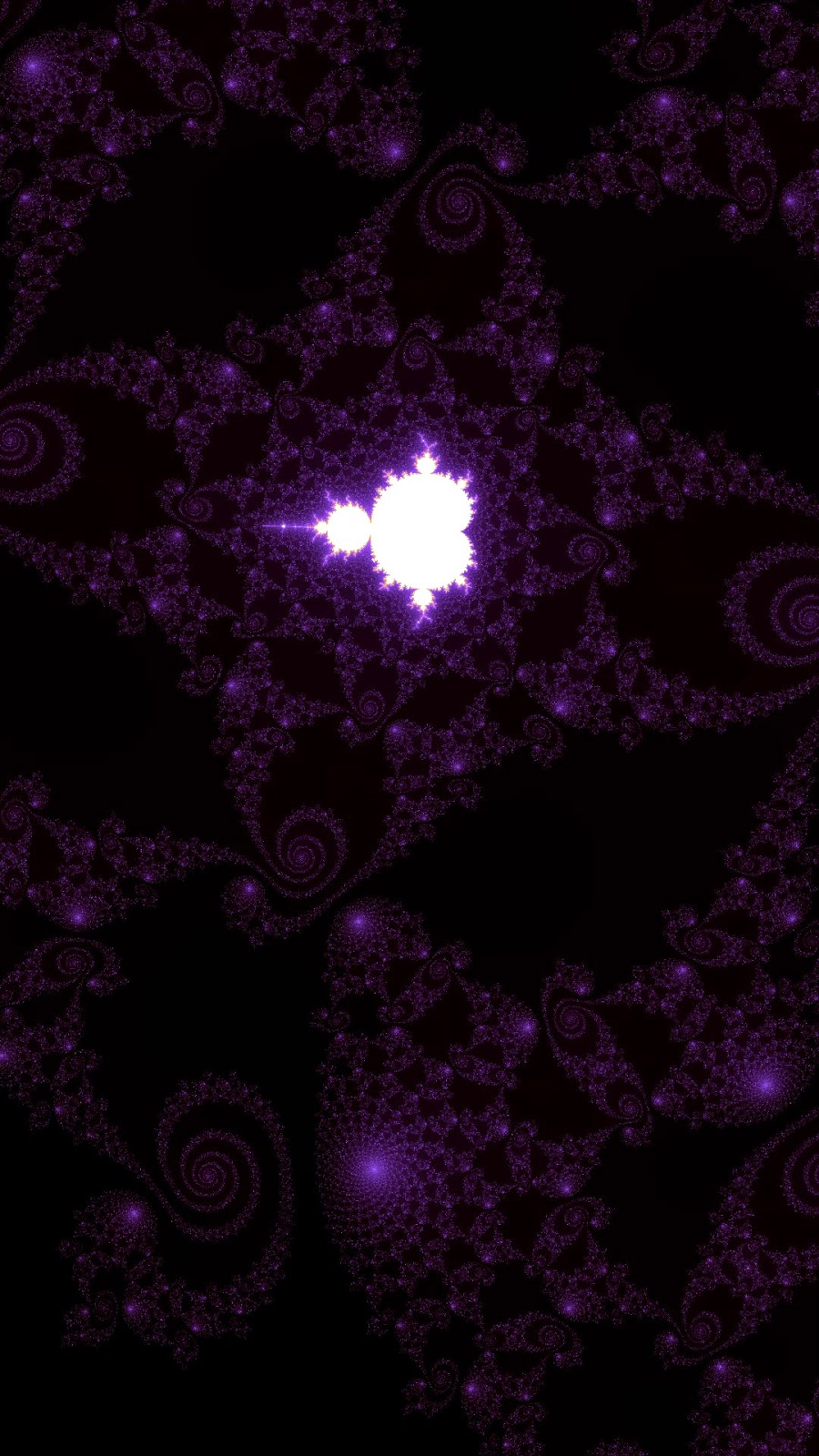
Fractals describe a more direct relationship between a visible artform and its differential equation. Eric's article which introduces Mandelbrot, a form of fractal art that relates to objects found in nature to be composed of smaller subunits that is consistent in identity. 

My scientific idol once said "what I cannot create I don't understand." Thus, after modifying several underlying series equations I rendered my own fractal art!

My own modification of fractal art

Citation


Burk, Phil, Larry Polansky, Douglas Repetto, Mary Roberts, and Dan RockmoreCo. "Music and Computers." Music and Computers. Columbia University, n.d. Web. 05 Apr. 2015.

Jansberg, Henrik. "The Jansberg Blog." : Violin & Viola EQ and Frequencies Part L. N.p., n.d. Web. 05 Apr. 2015.

Vesna, Victoria. “Mathematics-pt1-ZeroPerspectiveGoldenMean.mov.” Cole UC online. Youtube, 9 April 2012. Web. 11 Oct. 2012. <http://www.youtube.com/watch?v=mMmq5B1LKDg&feature=player_embedded>

Weisstein, Eric W. "Mandelbrot Set." From MathWorld--A Wolfram Web Resource. http://mathworld.wolfram.com/MandelbrotSet.html


Week 1 | Two Cultures | The art and science of Medicine

In 1959, C.P. Snow distinctly distinguishes the "intellectual life of the western society" into two polar ends - scientists at one end and literary intellectuals at the other.

Personally, I never thought too much about the distinction between the arts and sciences. Mostly because I never questioned whether there was actually a "third culture" in between the fine lines of literature and equations, that constantly drives both sides. 


Atomic Force Microscopy Professor/ Science director at CNSI 
who is also an aspiring artist during the weekend

Upon stepping foot into college, I didn't particularly understand why, as a Microbiology Immunology and Molecular Genetics major, I was shuffled into the umbrella College of "Letters" and Sciences when almost all of my classes take place on the right side of the campus divide.

My alma mater "UCLA" depicting the divide between "North" and "South" Campus
http://www.eeweb.ee.ucla.edu/images/welcome_UCLA%20Campus.jpg
Through my scientific training, I learned about the quantitative procedures necessary to bridge what we have in nature into innovations that are useful to mankind. At the same time, I also learned about the art of patient care and human nature. Seeing patients live and die, the world going around, led me to realize that everything - not only the art and sciences - are a part of the same system.

As of right now, it is my last quarter at UCLA before heading off to medical school. I have come to realize "Medicine is an art based on science." There is a unquantifiable human motivation that drives scientific advancements in ways that artificial intelligence cannot ever. 


Book explaining the art of medicine and human function
http://www.ilex-press.com/wp-content/uploads/the-art-of-medicine-1-x-medi-lvcr-976x976.png
On a personal note, I am what people refer to ABC or "American born chinese." Also sometimes the acronym FOB or "Fresh off Boat." Through my own duality of Chinese and American culture, I experience life in way that I could ever have through only one. I learned to adopt the best of each culture from the food to work ethics and mentality. As a result, it became second nature to me to switch between English and Chinese in terms of both language and thoughts, just like the duality of arts and sciences.

Fresh off the boat is a humorous TV series that 
describes the life of asian immigrants
http://ib2.huluim.com/show_key_art/21869?size=1600x600&region=US

Citations


Anderson, Julie, Emm Barnes Johnstone, and Emma Shackleton. The Art of Medicine: Over 2000 Years of Medicine in Our Lives. Lewes: Ilex, 2011. Print.

Khan, Nahnatchka. Fresh off the Boat. Digital image.Http://ib2.huluim.com/show_key_art/21869?size=1600x600®ion=US. American Broadcasting Company, n.d. Web.

Panda, S.C. “Medicine: Science or Art?” Mens Sana Monographs 4.1 (2006): 127–138. PMC. Web. 1 Apr. 2015.

Snow, C. P. The Two Cultures and the Scientific Revolution. New York: Cambridge UP, 1959. Print.

TedxTalks. "The Third Culture: Science, Art, and Ideas: Dr. Adam Steig." Animation. Youtube. Web. 29, Aug 2012. <http://www.youtube.com/watch?v=rrCIIEyaL_o>

UCLA. Digital image.Http://www.eeweb.ee.ucla.edu/images/welcome_UCLA%20Campus.jpg. UCLA, n.d. Web.

Vesna, Victoria. "Toward a Third Culture: Being In Between." Leonardo. 34 (2001): 121-125. Print.